
When a child struggles academically, parents often ask whether they need Tutoring or Educational Therapy. While both support learning, their approach and long-term impact are very different.
What Does a Tutor Do?
Tutors reteach a specific curriculum and use traditional methods to help the child understand through repetitions, practice, and reinforcement.
Their focus is primarily on improving performance in a subject by revisiting classroom content and ensuring the child keeps up with academic expectations.
Tutoring improves performance in subjects.
What Is Educational Therapy?
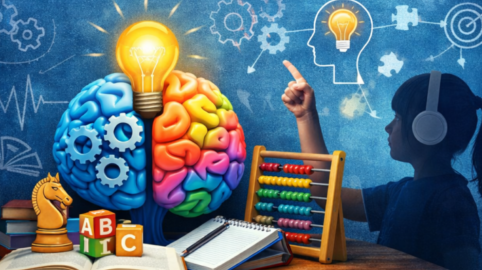
Educational Therapy focuses on the skills required for learning. It emphasizes the foundational skills and techniques necessary for a child to become an independent learner. It addresses cognitive, emotional, social, and academic aspects. The cognitive, emotional, and social components play a major role in academic success.
Unlike tutoring, Educational Therapy looks beyond subject content. It works on strengthening the child’s learning skills, executive functioning, and overall ability to process, retain, and apply information independently.
Addressing the Root Cause of Learning Challenges
For example, a child who knows that he cannot read well may become anxious when asked to read in front of the class. An Educational Therapist tries to identify the root cause of his or her anxiety and address it. The therapist may teach relaxation techniques and use paired reading strategies before introducing structured reading techniques. This helps create a positive association with reading.
Another example is when a tutor works with a child who has difficulty with written expression, including repeated grammar errors and poor handwriting. A therapist will consider whether occupational therapy is required, whether the child needs cognitive enrichment, and whether there are any underlying learning differences that need to be addressed.
This holistic approach ensures that learning difficulties, reading challenges, writing difficulties, and related concerns are addressed at their foundation.
Individualized Intervention for Every Child
Educational Therapists not only address academic challenges but also co-related difficulties such as anxiety, low self-esteem, focus, and attention. They do not follow the same method for all children. Even if two children face similar challenges, each child receives an individualized plan.
To do this, therapists conduct assessments to understand the student’s strengths and weaknesses. Based on this understanding, they develop an individualized plan. The plan addresses reading, writing, spelling, and Math, along with executive functions such as organization and self-regulation.
Through structured learning assessments, individualized intervention plans, and targeted strategies, Educational Therapy supports long-term academic growth and independence.
A Collaborative, Multi-Disciplinary Approach
Educational Therapists also collaborate with all stakeholders, including parents, teachers, caregivers, occupational or physio therapists, psychologists, speech and language pathologists, and doctors. As a result, the intervention provided addresses all areas of the student’s needs in a comprehensive manner.
This collaborative model ensures the child receives consistent and well-coordinated support across environments home, school, and therapy settings.
Conclusion: What Is the Real Difference?
Tutoring improves performance in subjects.
Educational therapy improves the ability to learn.
While tutoring supports immediate academic needs, Educational Therapy builds independent learners by strengthening cognitive skills, emotional resilience, executive functioning, and confidence.